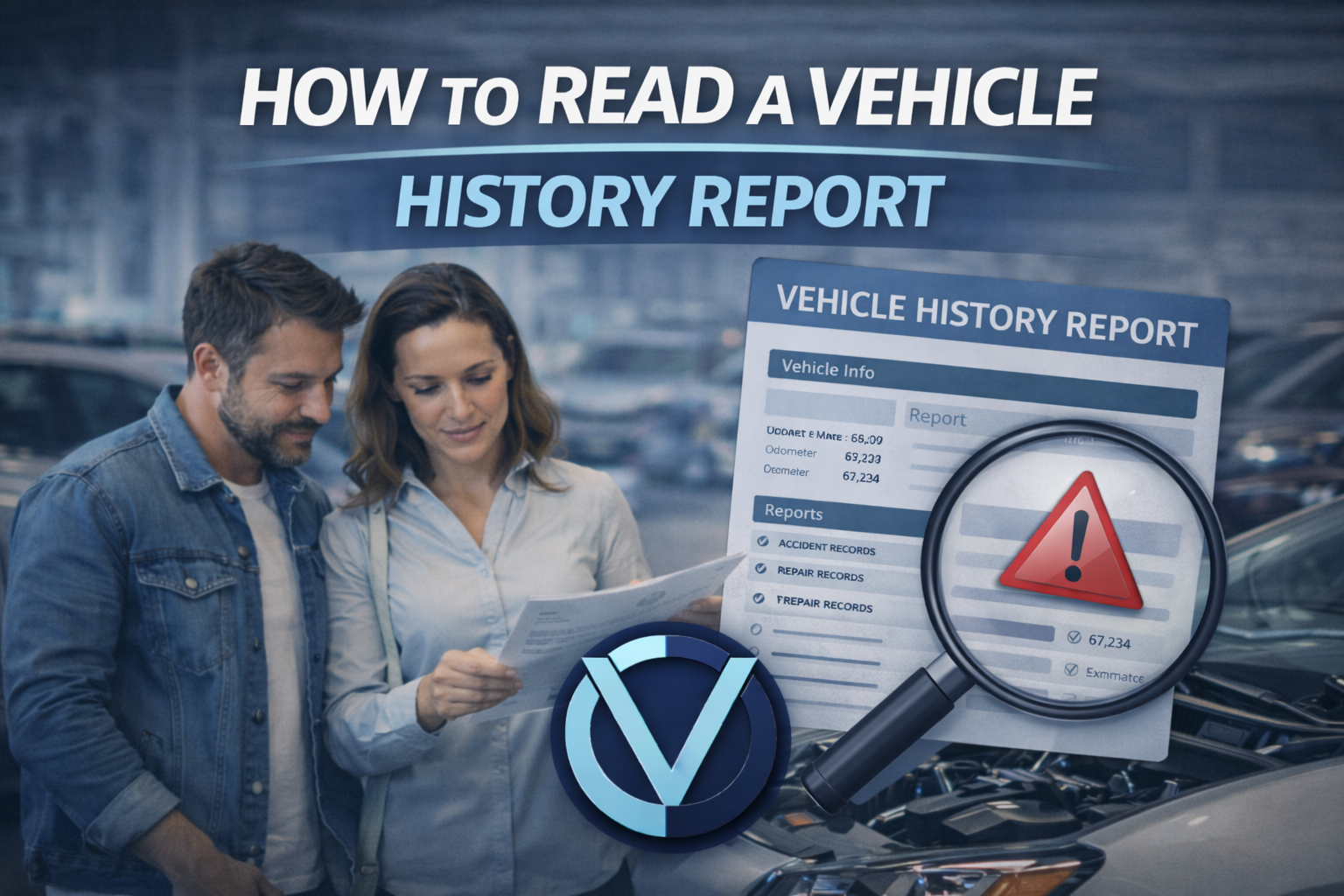
How to Read a Vehicle History Report
Vehicle history reports are one of the most useful tools when buying a used vehicle. Understanding what the information means helps you make a more informed and confident decision.
Ownership History
This section shows how many previous owners the vehicle has had and how long each one kept it. Fewer long-term owners can indicate consistent care, though multiple owners don’t automatically mean a problem.
Pay attention to patterns rather than just numbers.
Accident and Damage Records
Reported accidents may include collisions, insurance claims, or damage estimates. Not all accidents are equal—minor cosmetic damage is very different from structural or airbag-related repairs.
Understanding the severity of reported incidents is more important than simply whether an accident appears.
Service and Maintenance Records
Some reports include service history, showing oil changes, inspections, and repairs. Regular maintenance entries suggest the vehicle was cared for consistently.
Gaps in service records don’t always mean neglect, but documented maintenance adds peace of mind.
Registration and Usage
This section can indicate where the vehicle was registered and how it was used. Vehicles driven in extreme climates or for commercial purposes may experience different types of wear.
Final Thoughts
A vehicle history report doesn’t replace a physical inspection, but it adds valuable context. When combined with a test drive and professional evaluation, it helps buyers make safer, smarter decisions.